
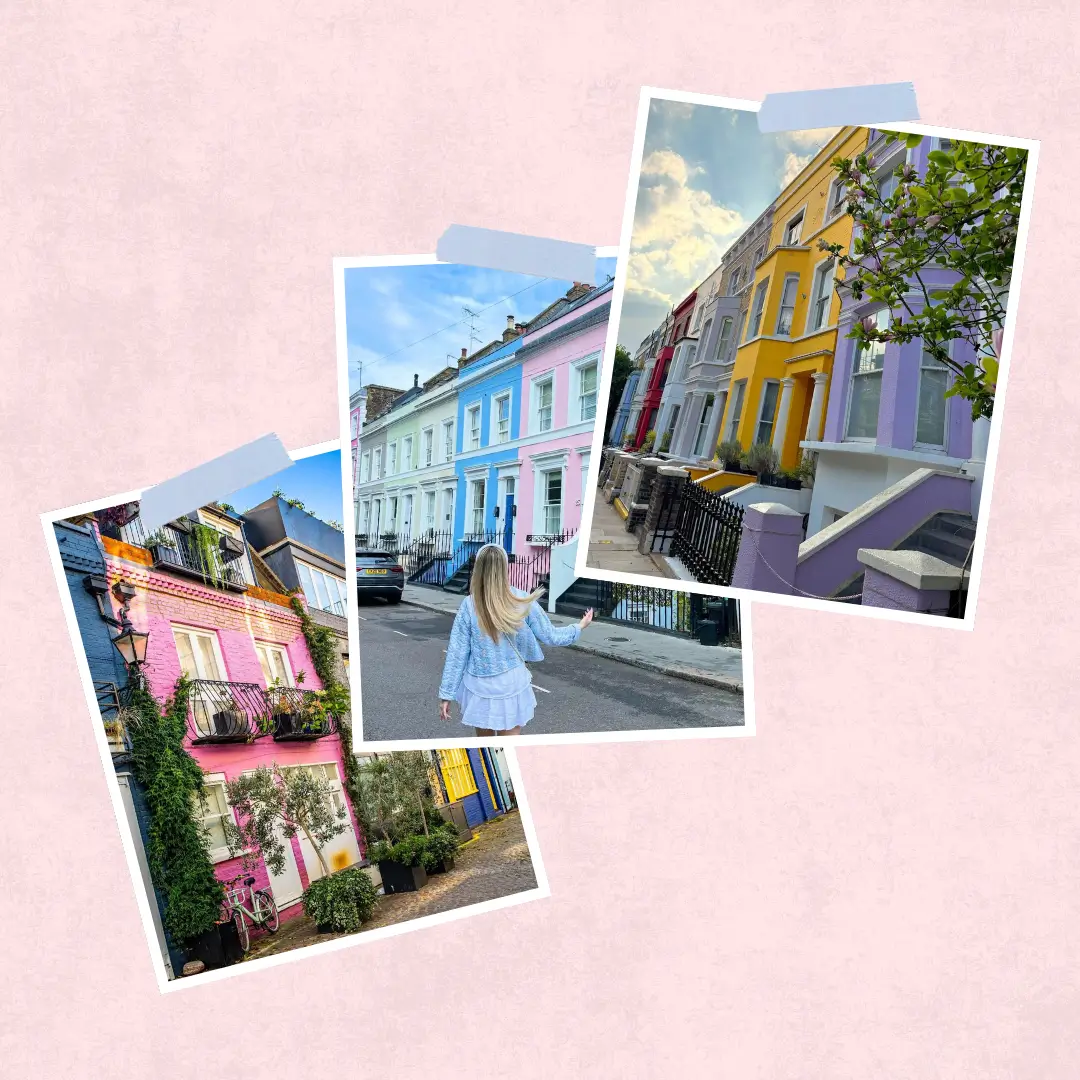
It doesn’t matter how many times you’ve seen them on Instagram — the colourful houses of Notting Hill still hit differently in person.
Turn a corner and suddenly you’re standing in front of a row of perfectly pastel terraces, each one looking like it was painted to match someone’s moodboard.
PIN FOR LATER 📌
It’s cinematic, a little too pretty to be real, and yet somehow still feels like London at its best — messy, charming, and completely alive.
If you’re planning a weekend wander through West London, this is one of those moments that deserves to be unhurried.
From the candy-pink façades of St Luke’s Mews (yes, the Love Actually street) to the elegant curve of Elgin Crescent and the vibrant chaos of Portobello Road, Notting Hill is an easy reminder that sometimes the city’s most photographed corners are famous for a reason.
Where to Find the Colourful Houses in Notting Hill
St Luke’s Mews
If you’ve ever watched Love Actually, you’ll recognise this one instantly — it’s where that romantic doorstep scene was filmed. But movie moments aside, St Luke’s Mews might just be one of the most beautiful streets in London. Cobblestones, ivy-covered façades, and pastel-fronted mews houses that look too perfect to be real — it’s every photographer’s dream. Go early in the morning for that soft, golden light and a little peace before the crowds arrive.



Portobello Road
Yes, it’s touristy — but it’s also iconic. Portobello Road is where colour meets chaos in the best possible way. On market days, you’ll find locals weaving between vintage stalls and travellers snapping photos of every pink or mint-green doorway they pass. Head north toward Westbourne Park Road for some of the prettiest terraces, or wander just off the main drag to find quieter, equally photogenic side streets.
Elgin Crescent
A little more refined and residential, Elgin Crescent is the quieter, grown-up sister of Portobello. Its pastel-painted townhouses feel timeless — elegant, soft-hued, and lined with manicured gardens that look straight out of a Nancy Meyers film. It’s worth a slow stroll, coffee in hand, just to soak in that effortless West London calm.
YOU MAY ALSO LIKE: 13 Places To Get The Best Coffee In Notting Hill
Lancaster Road
If you’re after colour in all caps, start here. Lancaster Road is the rainbow row that shows up on every postcard and Pinterest board — bold yellows, sky blues, coral pinks, and turquoise lined up in perfect harmony. It’s bright, unapologetic, and pure joy on a grey London day.
Colville Terrace
Tucked between Portobello Road and Westbourne Grove, Colville Terrace is the kind of street that rewards curiosity. Its mix of soft pastels and classic white façades gives it that lived-in charm — you’ll likely spot locals walking their dogs or unloading fresh flowers from the market. It’s a subtle kind of pretty, and honestly, that’s what makes it so special.
YOU MAY ALSO LIKE: Best Dog Cafes In London
Denbigh Terrace
Denbigh Terrace doesn’t shout for attention, but it honestly doesn’t need to. The homes here are painted in muted pastels — think sage greens and dusty blues — and framed by climbing ivy. It feels slightly hidden, slightly secret, and wonderfully cinematic in that low-key Notting Hill way.
Westbourne Park Road
YOU MAY ALSO LIKE: 10 Best Bakeries In Notting Hill Worth Getting Out of Bed For
A stroll down Westbourne Park Road is like stepping into a film scene — and technically, it is, thanks to its cameo in the 1999 classic Notting Hill. The colours here are rich but understated, and the street’s gentle curve gives every façade its own spotlight. Bring your camera; you’ll use it.
Pottery Lane
For something a little different, head to Pottery Lane, one of the area’s oldest streets. It has a slightly more rustic feel, with brick cottages and curved rows that speak to its past as a 19th-century pottery district. It’s a reminder that Notting Hill wasn’t always glossy and pastel — and that’s part of its charm.
When to Visit
The truth is, the colourful houses of Notting Hill look good in almost any light — even under a moody London sky — but timing does make all the difference.
If you’re hoping for that soft, golden glow you see all over Instagram, aim for early morning or golden hour (around sunrise or just before sunset). The light hits the façades of St Luke’s Mews and Lancaster Road beautifully, then, warming up the pastels and giving everything that dreamy, cinematic glow.
Plus, you’ll avoid the crowds — because, TBH, there’s nothing less magical than trying to photograph a pink townhouse while dodging a busload of tourists.
For a quieter, more local feel, weekday mornings are your best bet. You’ll mostly cross paths with dog walkers, delivery bikes, and the occasional neighbour carrying their takeaway coffee, which makes it all the more charming.
And if it rains? Don’t stress it. The colours pop even more against wet pavements, and the reflections make your photos feel straight out of a film still.
A Little History
It’s hard to imagine now, but Notting Hill wasn’t always the pastel-hued dream it is today.
Back in the mid-20th century, this corner of West London had a far grittier edge — a working-class neighbourhood marked by social unrest and a vibrant immigrant community that laid the foundations for its creative spirit.
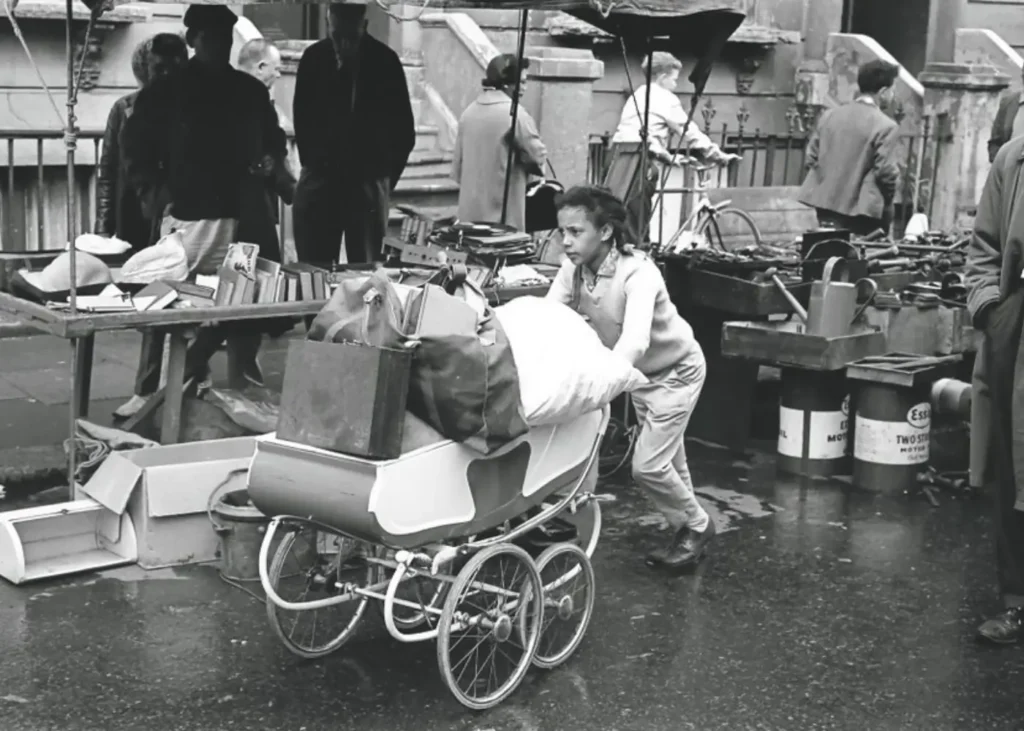
By the 1960s and ’70s, artists and young professionals started moving in, drawn by the affordable rent and the area’s cultural energy.
Slowly, those once-faded façades were painted in cheerful pastels — part pride, part rebellion against the grey of postwar London.
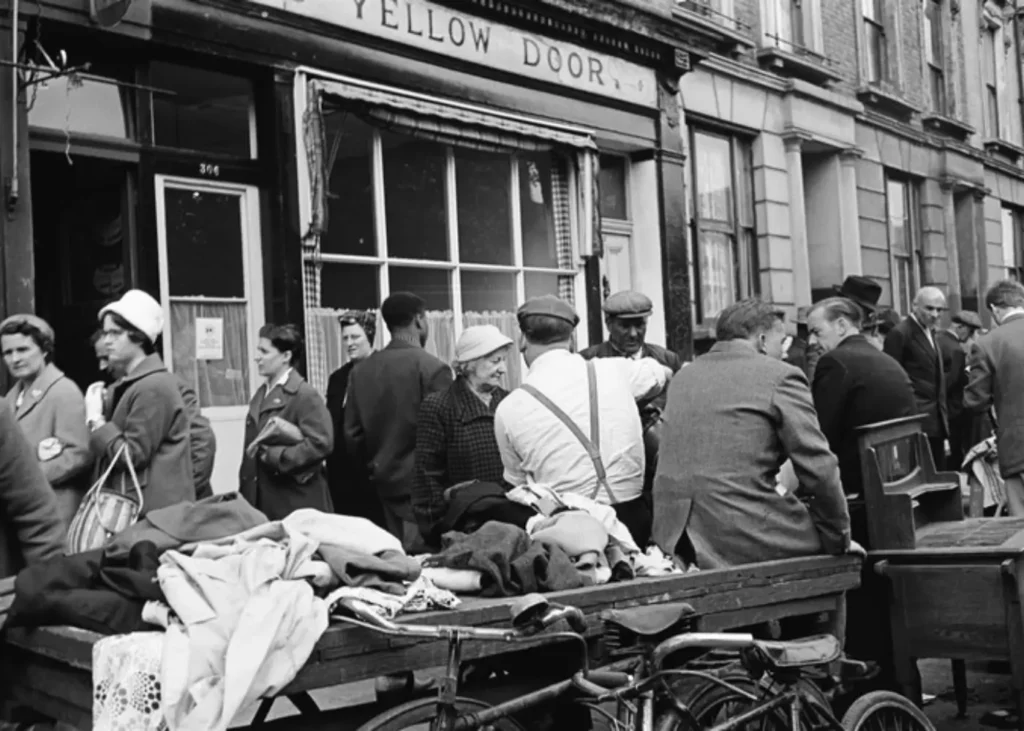
What began as small acts of individuality became an aesthetic identity.
Now, those colourful houses are instantly recognisable — a visual shorthand for the neighbourhood’s charm, resilience, and evolution.
Beneath the pinks and blues, there’s a deeper story: one of reinvention, community, and the kind of beauty that grows out of history, not over it.
TRY THIS NEXT: 17 Best Pubs in Hackney (That Are Actually Worth Your Time)