
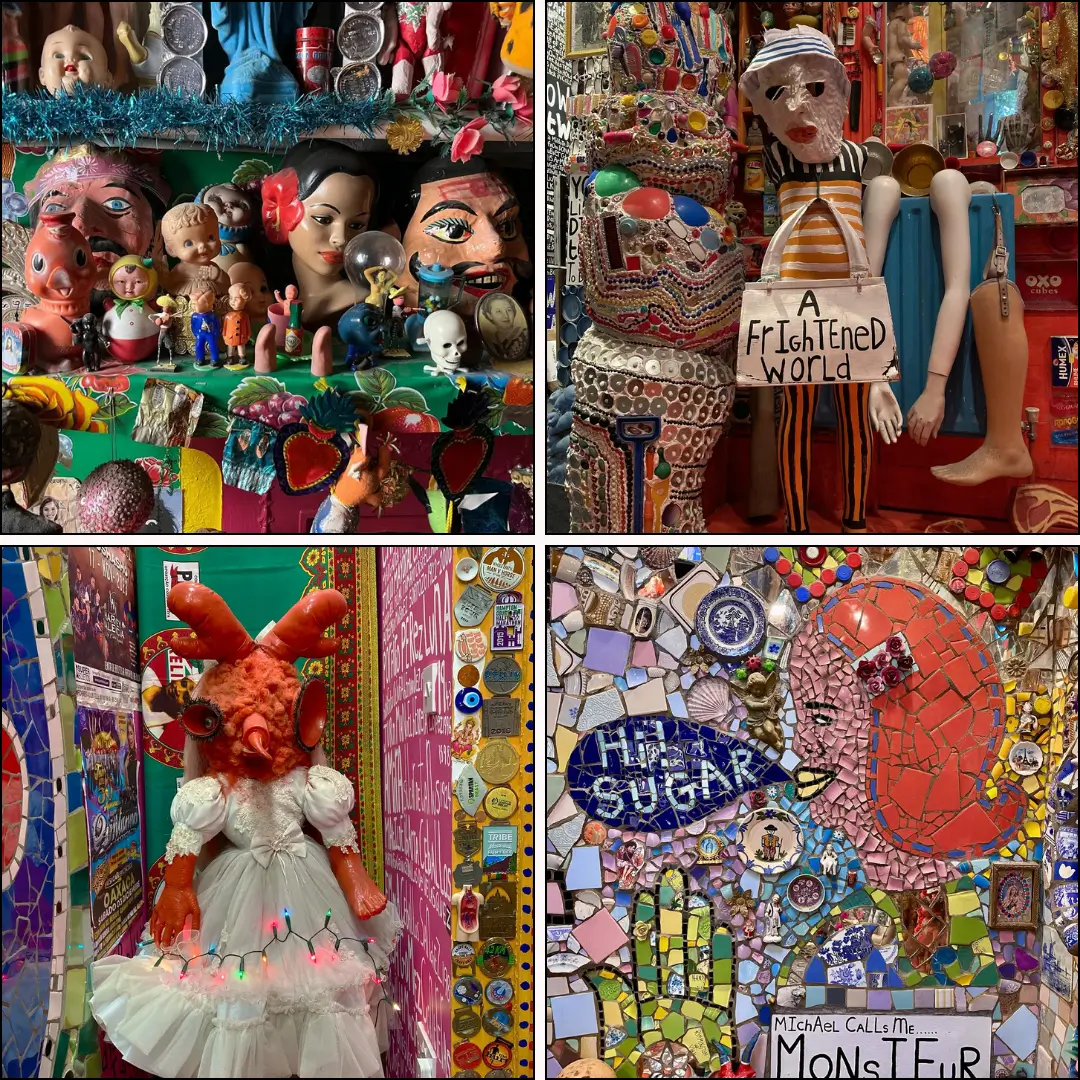
There’s a terraced house in East Dulwich that looks, from the outside, like it might be slightly unusual.
Step through the gate and you’ll find yourself inside one of the most extraordinary spaces in London, possibly in the country. Every surface of Stephen Wright’s home is covered. Walls, ceilings, garden, exterior.
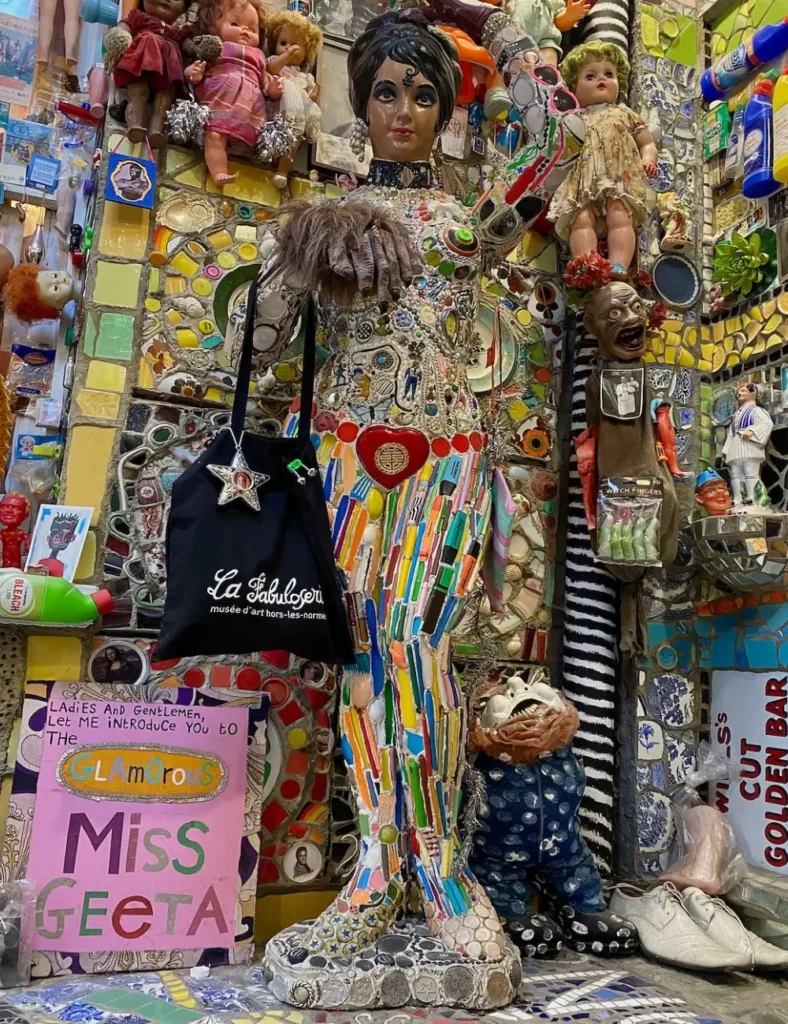
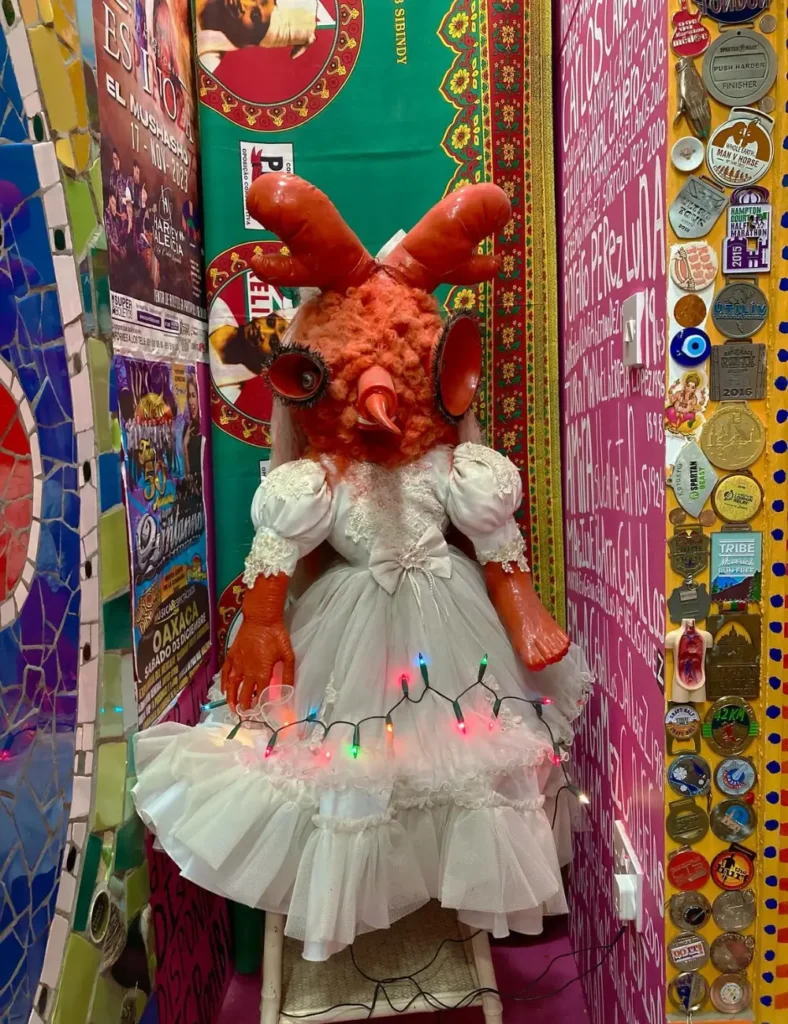
Thousands of found objects—mosaiced, stitched, and stuck into every available inch: broken dolls collected from markets in Budapest, Prague, and Madrid. Teeth moulds. Vintage glasses from Paris flea markets.
A dented-faced doll run over by a car at Deptford Market (one of his favourites, for the record).
Siamese twin sculptures made from doll heads bought together at the Vanves flea market in Paris because, as Wright puts it, being bought together meant they needed to stay together.
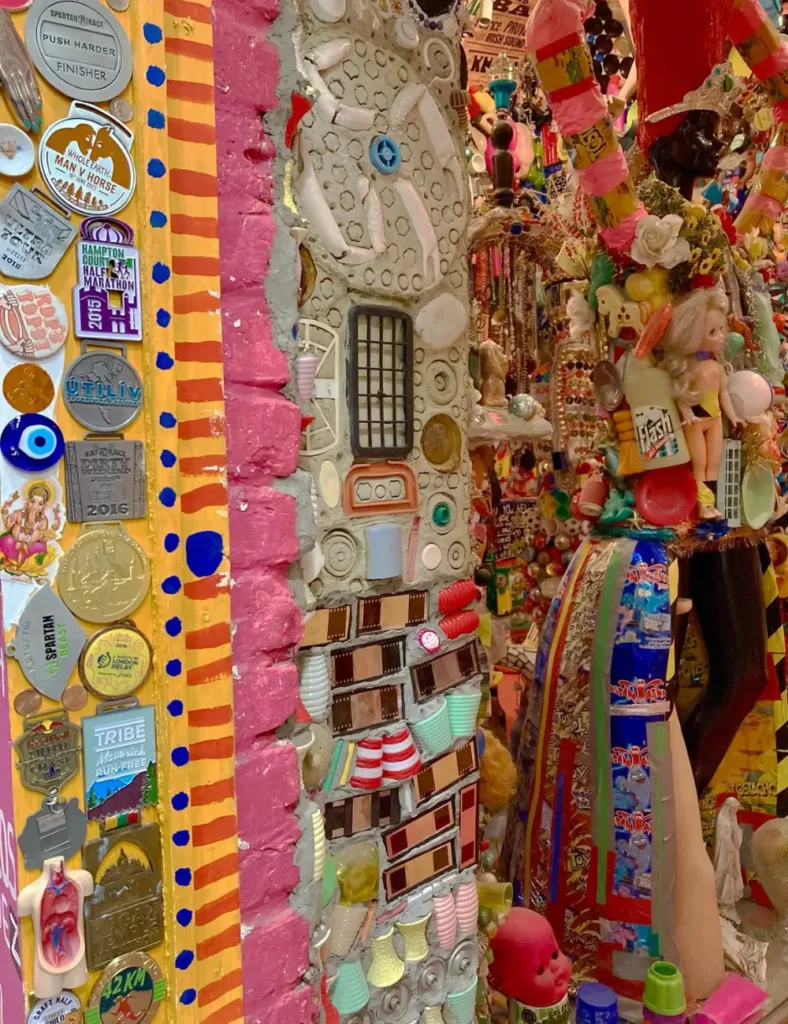
Hundreds of handwritten memory boards covering everything from childhood bullying to overheard conversations on public transport to political commentary to random thoughts about life.
It has been bequeathed to the National Trust. Jarvis Cocker presented the TV programme that inspired it. And it opens to the public just one Saturday a month, for £10 a ticket. Book early. It sells out.
EVERYONE’S CLICKING ON:
The Painted Hall, Greenwich: Britain’s Answer to the Sistine Chapel (And Why You’re Sleeping On It)
God’s Own Junkyard: The Neon Wonderland in Walthamstow You Need to Visit
Cable Car-aoke: London’s Most Unexpected (and Genius) Night Out Right Now
Frida: The Making of an Icon at Tate Modern — Everything You Need to Know
The Fan Museum Greenwich: The World’s Only Fan Museum (And One of London’s Best Hidden Gems)
What is the House of Dreams?
Stephen Wright began transforming his East Dulwich home in 1998, inspired by the Channel 4 series Journeys into the Outside, in which Jarvis Cocker explored the world of Outsider Art environments.
What started as a creative project became something considerably more personal: a full-scale diary of Wright’s life, relationships, travels, losses, and joys, told entirely through found and made objects.
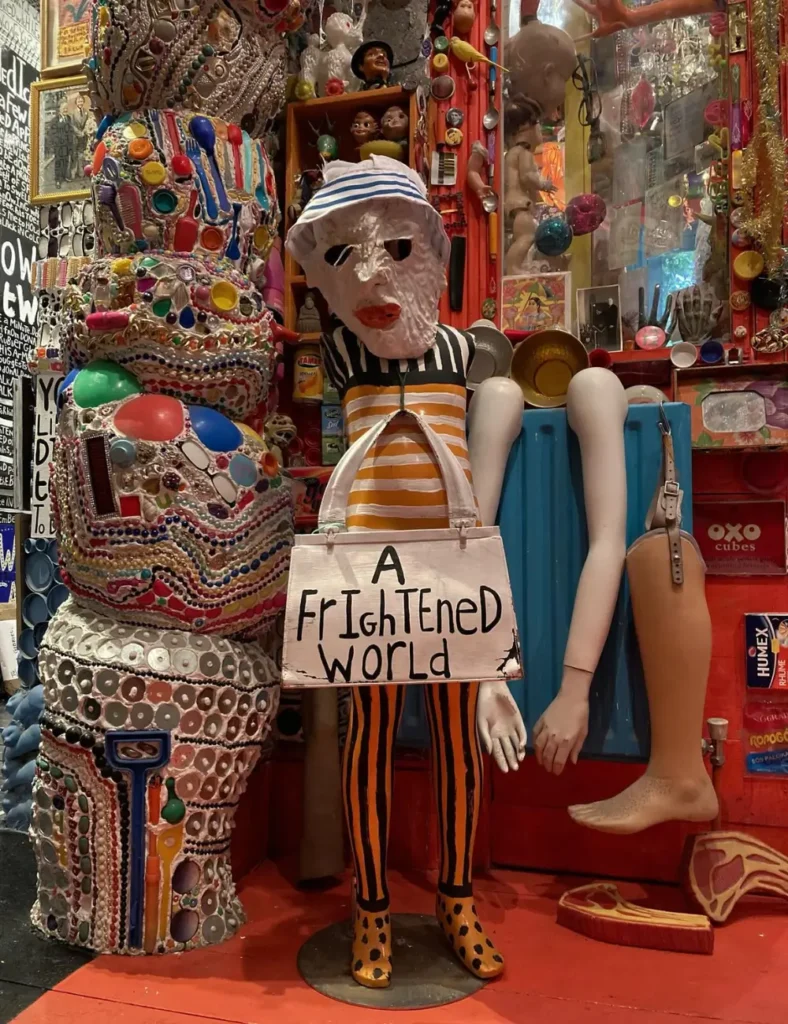
He describes it as a home for the discarded and unwanted. The objects come from London markets, Paris, India, Mexico, Budapest, Prague, and Madrid. Many he has made himself. All of them mean something.
The ground floor, garden, and exterior of the house are entirely covered. Every room has its own character, its own collections, and its own emotional register.
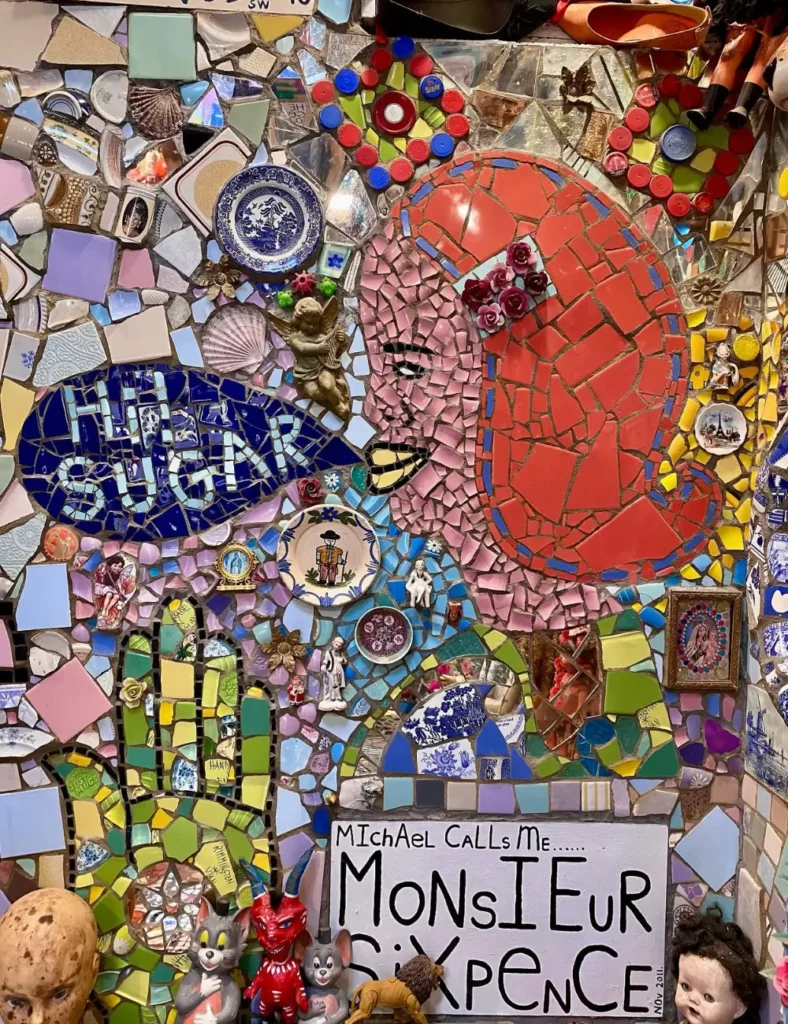
There are memory boards reflecting momentous life events alongside thoughts about love, loss, trauma, and moving forward.
There are shrines built from Mexican folk art objects alongside handmade sculptures that Wright considers part of his family.
There is a ponytail that once belonged to an actor called Richard Ashton. There is a little black purse that belonged to Wright’s mother, found after her death, containing miniature light bulbs and screwed-up pieces of silver paper. He left the contents exactly as they were found.
It is, in the truest sense, unlike anything else in London.
What to expect on your visit
Tickets give you 90 minutes inside the house, and Wright himself is usually present—which makes the visit considerably more personal than a standard museum experience.
He talks about the objects, the stories behind them, and the decisions he made. Conversations happen naturally. The kind of afternoon that starts as a cultural visit and ends feeling like something more.
The house opens on selected Saturdays only, 9.30am to 5pm, with timed entry slots. Capacity is limited, and tickets sell out quickly.
Check the website for upcoming dates and book in advance; turning up without a booking isn’t an option.
Practical Information
Tickets and pricing: £10 adult entry. Children go free.
Opening times: One Saturday per month, 9.30am to 5pm. Check stephenwrightartist.com for upcoming dates.
Advance booking is essential at stephenwrightartist.com/book-now. It sells out.
Location: 45 Melbourne Grove, East Dulwich, London SE22 8RG. Nearest stations: East Dulwich overground or Peckham Rye overground.