
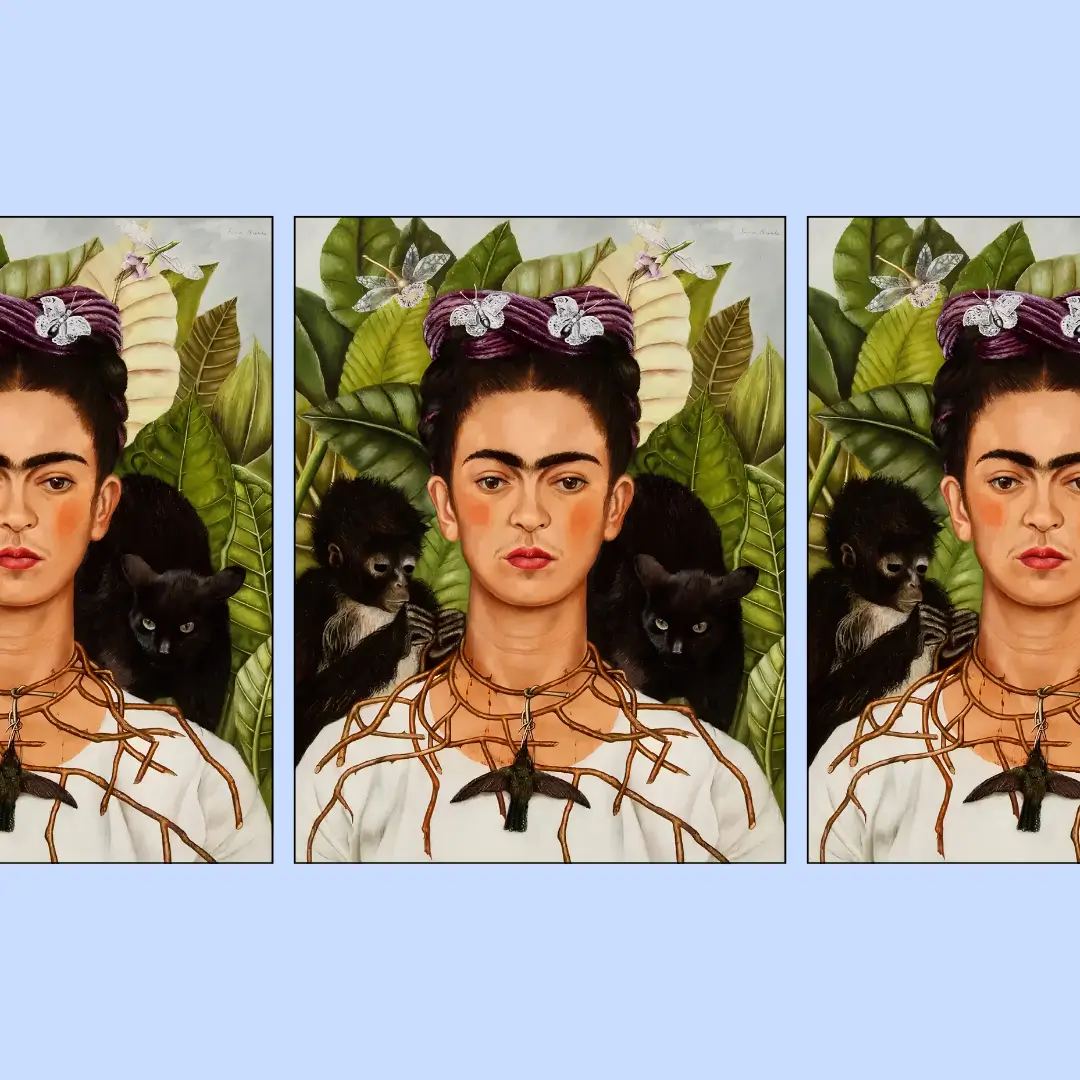
If there’s one exhibition worth rearranging your entire autumn for, it’s this one.
Frida: The Making of an Icon at Tate Modern is the kind of show that comes along once in a generation, a full-scale retrospective of one of the most fascinating, complex, and endlessly relevant artists who ever lived, running at one of the world’s great galleries until 3rd January 2027.
Frida Kahlo has been on every mood board, every tote bag, and every feminist art print for decades, and this exhibition finally asks the question nobody else has put at the centre of a major show: how did a Mexican surrealist painter with a deeply painful life become one of the most recognisable cultural icons on the planet?
The answer, it turns out, is complicated, fascinating, and completely worth four hours of your time.
What is the exhibition about?
Frida: The Making of an Icon is not a straightforward retrospective.
Yes, there are over 30 of Kahlo’s most iconic works on display, self-portraits, still lifes, and the paintings that made her a legend.
But the show goes considerably further than that.
Alongside her own work, there are over 200 works by her contemporaries and the artists she inspired across later generations, plus more than 200 commercial objects exploring her transformation into a global brand; think Frida on everything from perfume bottles to phone cases to high fashion.
The exhibition traces what Tate calls her “many selves,” the dedicated wife, the intellectual, the modern artist, and the political activist, and then follows the thread of how each of those selves became something larger than the person herself.
The final section on Fridamania is genuinely fascinating and slightly uncomfortable in the best possible way.
It raises questions about who gets to own an icon and whether the Frida on the tote bag has anything to do with the woman who painted The Broken Column while recovering from her 35th surgery.
One content note worth knowing before you go: the exhibition contains images of dead bodies and references to sexual violence and miscarriage.
Important context rather than gratuitous detail, but still worth knowing ahead of time.
EVERYONE’S CLICKING ON:
God’s Own Junkyard: The Neon Wonderland in Walthamstow You Need to Visit
Cable Car-aoke: London’s Most Unexpected (and Genius) Night Out Right Now
The Fan Museum Greenwich: The World’s Only Fan Museum (And One of London’s Best Hidden Gems)
The Tulip Stairs at Greenwich: London’s Most Beautiful (and Allegedly Haunted) Staircase
Mundo Pixar Experience London: Everything You Need to Know Before You Go
The highlights
Self-Portrait with Thorn Necklace and Hummingbird (1940)
The lead image for the exhibition and one of the most famous self-portraits in the history of art. In person, it’s considerably smaller and more intimate than you expect, which makes it more powerful rather than less.
Self-Portrait with Loose Hair (1938)
Recently acquired and rarely exhibited publicly. One of the quieter, more vulnerable self-portraits and a counterpoint to the more theatrical works nearby.
Memory or The Heart (1937)
One of Kahlo’s most explicitly autobiographical works, painted during the crisis of her divorce from Diego Rivera. The kind of painting that makes you stop moving.
The Fridamania rooms
The commercial objects section is unlike anything else in the show and unlike anything Tate has done with a major retrospective before. Polarising in the best possible way.
Works by artists she inspired
Yasumasa Morimura’s An Inner Dialogue with Frida Kahlo (2001), Marcos Raya’s Frida the Last Portrait (1985), and Río Yañez’s Ghetto Frida’s Mission Memories (2009), among others. These rooms are underrated and genuinely worth slowing down for.
YOU MAY ALSO LIKE: The Ultimate London Bucket List: Everything Worth Doing At Least Once
Make the most of your visit
Add the audio guide: a £5 smartphone audio guide is available at booking and is worth it. You receive an exclusive link via email before your visit; bring your own headphones.
Book exhibition + lunch or dinner: for £64 you get exhibition entry plus two courses from the seasonal set menu at Tate Modern’s Level 6 restaurant, with Thames views. Available with lunch on weekday slots and with dinner on Friday and Saturday evenings. One of the better ways to spend a full day in London.
Or add a cocktail: for £39 you get exhibition entry plus a cocktail at the restaurant on Friday or Saturday evenings from 6pm. A genuinely good option if you’re visiting after work.
Late opening: the gallery is open until 9pm every Friday and Saturday, which makes it one of the better after-work or date-night options in London right now.
Relaxed Hours: a quieter session runs on the third Tuesday of each month from 10am to 11am, designed for visitors who benefit from a calmer environment.
Members Hours: if you’re a Tate member, you can visit every Saturday and Sunday from 9am to 10am before the gallery opens to the public.
Tate Collective: aged 16 to 25? Sign up for Tate Collective for £5 entry. One of the best cultural deals in London.
Related events worth booking
- Exhibition Talk — a one-hour introductory talk followed by entry into the exhibition. Multiple dates available.
- Expert Guide Tour — selected Saturdays at 10.15am and every Saturday at 5.30pm with a Tate Expert Guide.
- Silk Painting Workshop with Hilary Simon — 12th September and 10th October. Designs inspired by the exhibition.
- Slow Looking: Jameisha Prescod on Frida Kahlo — 22nd October. Out-of-hours access following the talk.
Practical Information & Map
Price: £25 standard entry. Free for Tate Members. £5 for Tate Collective (16 to 25 year olds). Concessions available. The audio guide is an additional £5.
Dates: 25th June 2026 to 3rd January 2027. Advance booking strongly recommended.
Opening Times: Sunday to Thursday, 10am to 6pm. Friday and Saturday 10am to 9pm.
Accessibility: Fully step-free access via the Turbine Hall and all entrances. Lifts to every floor. Fully accessible toilets on every floor. Quiet room available on Level 4. Ear defenders available from the ticket desk.
Location: Tate Modern, Bankside, London SE1 9TG. The nearest tube stations are Southwark (Jubilee line) and Blackfriars (Circle and District lines), both a short walk across the Millennium Bridge.
Is it worth £25?
For a show of this scale and ambition, yes… genuinely.
Over 30 Kahlo originals alongside 200-plus works by other artists and 200-plus commercial objects, in a building that is itself one of the great art spaces in the world.
The Fridamania rooms alone are worth the ticket price for the conversation they start. If you’re a Tate Member or aged 16 to 25, it’s an absolute no-brainer.